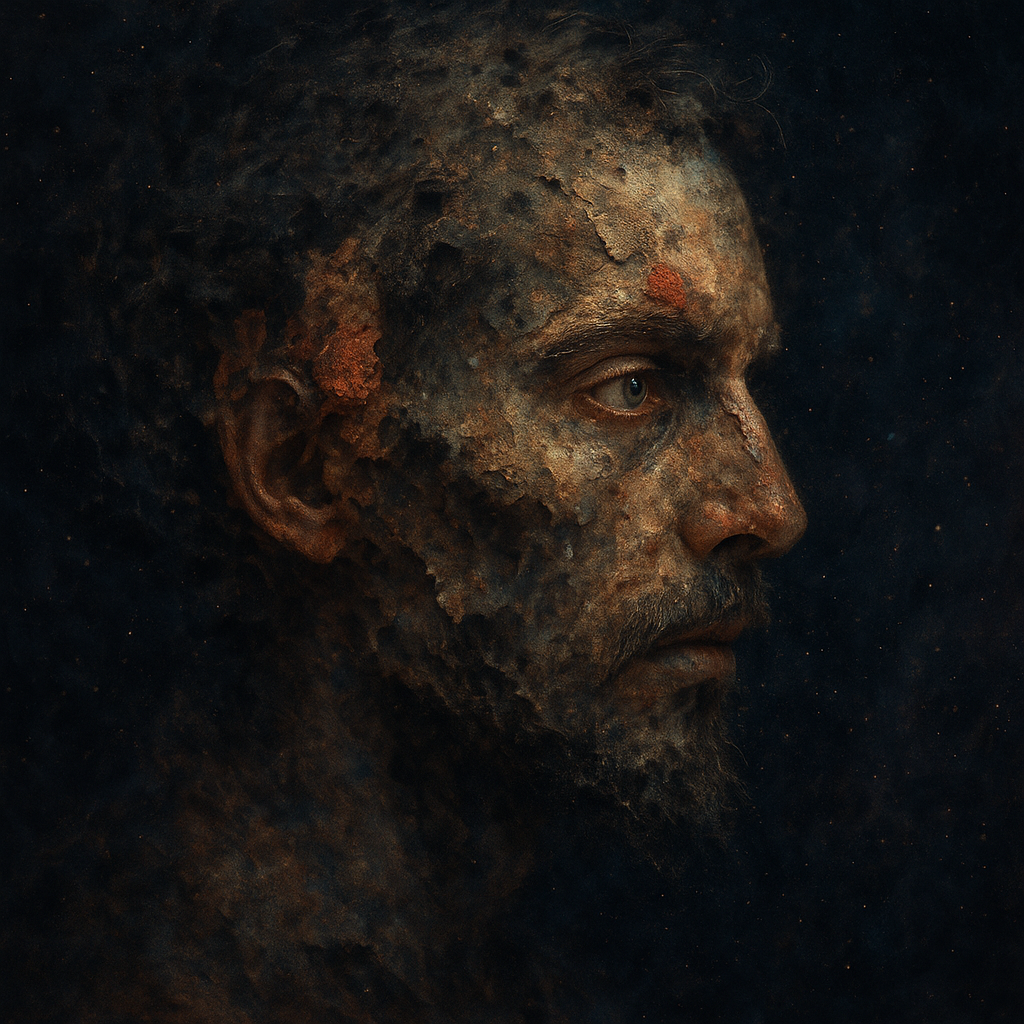
The Mind That Refuses to Specialize: On Being an Intellectual Omnivore
On intellectual omnivores: minds organized by pattern rather than subject — curiosity versus performance, contradiction as habitat, and the loneliness of range.
Most minds eventually choose a lane. A physicist stays inside physics long enough that physics becomes a native language, and everything outside it gets translated through that lens, sometimes awkwardly. A historian does the same with centuries and causation. A poet does the same with image and rhythm. Specialization is not a failure of curiosity; it is usually the result of curiosity finding one subject deep enough to spend a lifetime in. But a smaller, stranger category of mind exists, one that never agrees to that trade.
It wants physics and poetry and policy and neuroscience and film at the same time, not as separate hobbies filed into separate drawers, but as parts of a single ongoing conversation happening inside one head. This is the intellectual omnivore, and understanding this kind of mind requires looking past the obvious, trivia-night version of the idea, the person who simply knows a lot about many things, and into something closer to a worldview.
What an Intellectual Omnivore Actually Is
An intellectual omnivore is not defined by the sheer volume of facts stored away, though the volume is often real. The defining trait is structural rather than quantitative: a refusal to accept that fields of knowledge come with locked doors between them. Where most people experience physics, philosophy, history, psychology, art, and literature as separate rooms in a house, each requiring a different key, the omnivore experiences the house as having no interior walls at all. A conversation can begin with the thermodynamic arrow of time and end, twenty minutes later, discussing why a particular painting feels melancholic, and the omnivore will not experience that as a topic change. It will feel like one continuous thought that simply changed its clothing.
This produces a very particular cognitive signature. Ask an intellectual omnivore to explain entropy, and the explanation might arrive dressed in a metaphor borrowed from a breakup. Ask about a historical betrayal, and the answer might reach for game theory. Ask about a film's ending, and the response might pull in a philosophical argument about free will that has nothing to do with cinema on its surface and everything to do with it underneath. None of this is showing off, though it can look that way to an outside observer. It is simply how the mind is organized: not by subject, but by pattern.
The Mechanics of Omnivorous Thought
The interesting question is not that this kind of thinking exists, but how it actually works. Most education trains people to think in silos, because silos are easier to teach, easier to test, and easier to grade. A mathematics class rarely references a poem. A history class rarely references a differential equation. But the intellectual omnivore's mind does something education generally does not reward: it treats structure as more fundamental than subject matter.
A supernova collapsing under its own gravity and an empire collapsing under its own internal contradictions are, structurally, close cousins: both involve a system that sustained itself for a long period through an internal balance of opposing forces, until one force quietly outgrew the other and the whole arrangement gave way, sometimes gradually and sometimes all at once. A mind trained to notice structure rather than label will see that resemblance immediately, and will not particularly care that one example comes from astrophysics and the other from history. This is parallelism in its purest form, the act of noticing that two things dressed in completely different vocabulary are, underneath the vocabulary, telling the same shape of story.
This explains why an intellectual omnivore can fall into the private architecture of a quiet moment, the particular stillness of eyes meeting across a room, and can also want to pull apart the mechanics of the universe looking for a law hidden inside that stillness. Both impulses come from the same root: an inability to leave a pattern unexamined once it has been noticed, whether the pattern shows up in a cosmological constant or in the pause before someone decides to speak.
Master of None, and Deliberately So
The old proverb calls this kind of person a jack of all trades, master of none, and usually says it as an insult. The intellectual omnivore tends to accept the first half of that phrase and quietly reject the implied shame in the second. Mastery of one domain is a specific kind of achievement, earned through years of narrow, repetitive depth. The omnivore is not chasing that kind of mastery and generally knows it. What is being chased instead is breadth with enough depth in each direction to actually see the connective tissue between domains, which is a different skill entirely, and arguably a rarer one, because it requires enough competence in multiple languages of thought to translate between them without losing the meaning in transit.
This produces an uncomfortable in-between status. The omnivore is rarely the most qualified person on physics in a room full of physicists, nor the most qualified on poetry in a room full of poets, and can feel that gap sharply. But put a physicist and a poet in the same room with no one able to translate between their vocabularies, and the omnivore suddenly becomes the only person capable of making the two conversations recognize they were circling the same idea the entire time.
Genuine Curiosity Versus Performed Knowledge
A crucial distinction has to be made here, because the modern world is extremely good at manufacturing the appearance of this kind of mind without the substance behind it. Scrolling through enough summarized content, enough curated quote graphics, enough algorithmically served trivia, can produce a convincing simulation of range. This simulation has a name worth borrowing from gaming culture: larping, short for live-action role-play, the act of dressing as a character without being that character.
The larp version of intellectual range is instantly recognizable once the pattern is known. It reaches for the name of a theory without being able to explain what the theory actually claims or where it breaks down. It quotes a philosopher without being able to state the philosopher's actual argument in different words. It performs certainty, because certainty photographs well, while genuine intellectual omnivorism tends to produce the opposite: a comfort with not knowing, a willingness to say that a question remains open, a habit of holding a position loosely enough to drop it the moment better evidence arrives.
The difference, stated plainly, is that knowing is a verb and understanding is a structure. Knowing that entropy always increases in a closed system is trivia. Understanding why that fact makes certain kinds of hope mathematically naive, and certain kinds of hope mathematically reasonable anyway, is the actual work. Genuine intellectual omnivorism is always doing the second kind of work, slowly, often invisibly, usually without an audience. Performed knowledge is almost always doing the first kind, loudly, because the first kind is what survives being compressed into a caption.
Contradiction as a Natural Habitat
One of the more disorienting features of this kind of mind, to people encountering it for the first time, is how comfortably it holds contradiction. The same person capable of a genuinely rigorous argument about causality in physics can, thirty seconds later, laugh helplessly at something utterly illogical, a pun, a slapstick scene, a joke that makes no structural sense at all. This is not inconsistency. It is closer to range being exercised in both directions at once, seriousness and absurdity treated as two instruments in the same orchestra rather than two different orchestras entirely.
This same comfort with contradiction shows up in how an intellectual omnivore relates to love, to beauty, to the parts of life that resist formalization. There is no contradiction, in this worldview, between wanting to understand the exact physics of why a sunset produces the colors it does and simply wanting to sit and watch it happen without explaining anything at all. The omnivore tends to want both. Explanation does not replace wonder for this kind of mind; it sits next to wonder, occasionally arguing with it, occasionally deepening it.
The Social Experience of an Unbounded Mind
None of this happens without cost, and the cost tends to show up socially long before it shows up anywhere else. Most conversation operates through shared reference points, and shared reference points require two people occupying roughly the same intellectual territory at the same time. An intellectual omnivore's territory keeps moving, which makes shared reference harder to maintain over time, not because the omnivore is uninterested in other people, but because the range of what counts as relevant keeps expanding past what casual conversation is built to hold.
This produces a specific, recognizable kind of isolation, separate from ordinary loneliness. Certain jokes stop landing, not out of superiority, but because the joke's logic has already been examined and found structurally thin. Certain stereotypes stop being usable shortcuts and start looking like unexamined claims demanding scrutiny. A pattern-finding mind cannot easily switch the pattern-finding off, even in casual settings where pattern-finding is mildly unwelcome, and that inability to fully relax into simplicity tends to read, to other people, as distance, even when no distance was intended.
The isolation deepens because so few people share the same appetite for this kind of range. It is entirely possible to find someone who matches an omnivore's depth in one subject, and rare to find someone who matches the full geometry, the physics and the poetry and the history and the film criticism and the quiet philosophical unease about where a society is heading, all held by the same person at the same time. Loneliness, in this frame, is not a flaw in the omnivore's character. It is closer to a statistical consequence of rarity, the lonely feeling that arrives whenever the population of people who think a certain way turns out to be small.
A few historical figures described exactly this kind of isolation long before the internet gave it a name.
“It is strange to be known so universally and yet to be so lonely.”
“Solitude is painful in youth, but delicious in the years of maturity.”
“A high degree of intellect makes a man unsocial; the more a man has in himself, the less he will want from other people. To be alone is the fate of all great minds.”
“If a man knows more than others, he becomes lonely.”
“The more you understand this world, the more you destroy yourself. That's why fools are happy, and intelligent people live in loneliness.”
“Loneliness is a tax we have to pay to atone for a certain complexity of mind.”
Why This Matters Beyond the Individual
It would be easy to read all of this as a private psychological curiosity, interesting only to the person living inside it. But the intellectual omnivore's refusal to respect disciplinary boundaries is not simply a personality quirk; it is one of the more reliable sources of genuinely new ideas. Breakthroughs tend to arrive at the seams between fields, in the gap where a method from one domain gets smuggled into a completely different one and turns out to explain something the original domain never could on its own. A mind built to live permanently at those seams, uncomfortable staying inside any single room for too long, is structurally suited to notice exactly the kind of connection that specialists, however brilliant within their own walls, are least likely to see.
This is also why the loneliness matters as more than a private sadness. A society that produces fewer and fewer people willing to sit with complexity, that fills its largest venues with easy laughter while leaving almost no room for difficult, cross-disciplinary conversation, is not simply inconveniencing a small group of unusually wide-ranging thinkers. It is quietly closing off one of the more productive sources of its own future ideas, because the seams between fields only get noticed by minds willing to stand in them.
Physical loneliness has remedies. Intimate loneliness, however painful, usually has a path back. Intellectual loneliness, the specific ache of rarely meeting another mind built the same way, does not come with an obvious cure, and that absence of a cure is less a flaw in any one person and more a quiet, underexamined cost that a specialization-obsessed culture imposes on the very minds most likely to connect what that culture has pulled apart.
The following line is quoted from the television series Game of Thrones, spoken by the character Petyr Baelish. All rights to this dialogue belong to its original creators and HBO; it is reproduced here only as a short illustrative reference, not as part of the essay's own voice.
“Fight every battle, everywhere, always. In your mind, everyone is your enemy, everyone is your friend. Every possible series of events is happening, all at once. Live that way, and nothing will surprise you. Everything that happens will be something that you've seen before.”
That quoted line, borrowed rather than owned, captures something the intellectual omnivore understands instinctively: a mind trained to hold every possibility at once, to treat every field as potentially relevant to every other field, stops being surprised by very much. What remains, after the surprise fades, is not certainty, and rarely comfort. What remains is a particular, demanding, occasionally isolating way of paying attention to the world, one discipline at a time, and all disciplines at once.